
Brisket, start to finish.
Buy it, trim it, season it, cook it, rest it. This is exactly how I do it - including the gear I reach for at each step. No shortcuts, no mystery.
Buy the right brisket
Start with a whole packer brisket - both the flat and the point, 12 to 16 pounds. Look for Prime or at least a good Choice grade: the marbling is your insurance policy on a long cook.
Bend test at the store: a brisket that flexes easily has less hard fat and a better-trimmed flat. Check the flat's thickness too - a paper-thin flat will dry out before the point is done.
Plan on about a half pound of cooked brisket per person. A 14-pound packer feeds 10–12 after trimming and shrink.
- A cooler for the ride home →Keeps the meat cold and contained, especially in a Texas summer.
Trim it
Trim cold, straight out of the fridge - cold fat cuts clean, warm fat smears. Take the fat cap down to about a quarter inch. Any thicker and it won't render; any thinner and you lose your shield against the heat.
Square off the thin edges of the flat so they don't burn, remove the hard deckle fat between the point and the flat (it never renders), and knock off any silver skin so the rub can reach the meat.
Save the clean fat trimmings - render them into tallow for the wrap or for the best burgers you've ever made.
- A sharp boning knife →A flexible, narrow blade gets around the deckle and under silver skin without gouging the meat.
- A big cutting board →A packer brisket is two feet long. Give yourself room to work.
- Nitrile gloves →Better grip on cold fat, faster cleanup.
Season it
This is where Texas Brisket rub earns its name. Big pepper, savory garlic, mesquite - built for beef and bark. No binder needed on a fresh-trimmed brisket, but a thin coat of mustard or tallow never hurt anybody.
Season liberally on every side - don't forget the edges. Then let it sit: at least an hour on the counter while the pit comes up to temp, or overnight in the fridge for the salt to work in.
Season from up high, like you're salting fries. You get even coverage and don't cake it on in patches.
- Texas Brisket rub →The pepper-and-mesquite blend this whole method is built around.
Cook it
Run the pit at 225–250°F with post oak pellets. Fat side toward the heat source. Put the brisket on and leave it alone - no spritzing, no peeking for the first 3 hours. Every time the lid opens you add 15 minutes.
When the bark is dark and set and the internal temp is around 165°F - usually 6 to 8 hours in - wrap it. Butcher paper, not foil: paper breathes, so the bark survives. Foil steams it off.
Keep cooking until it's probe-tender, usually 200–205°F internal. The thermometer is a guide; the feel is the truth. The probe should slide in like room-temperature butter.
Total cook time runs 10–14 hours depending on the brisket and the pit. Start earlier than you think - a rested brisket holds for hours, but a late brisket ruins dinner.
- A Yoder YS640s pellet grill →Heavy Kansas steel that holds 250°F all day without babysitting. Set the temp, load the pellets, and cook.
- Post oak pellets →The classic Texas brisket smoke. Clean, steady fire, no bitterness.
- A leave-in probe thermometer →Watch the cook without opening the lid.
- An instant-read thermometer →For the probe-tender check at the end.
- Pink butcher paper →Wraps the brisket without steaming off the bark you worked all day for.
- Heat-resistant gloves →For wrapping a 165°F brisket without burning your hands.
Rest it
This is the step everybody skips and the one that separates good brisket from great brisket. Rest the wrapped brisket in a dry cooler or a 150–170°F oven for at least 1 hour - 2 to 4 is better.
Resting lets the juices redistribute and the carryover cooking finish gently. Slice too early and all that moisture ends up on the cutting board instead of in the meat.
When it's time, slice the flat against the grain in pencil-thick slices, then rotate and slice the point. Serve it on the board and let people come to it.
A brisket in a towel-lined cooler will hold a safe serving temperature for 4+ hours. Resting long is almost impossible to overdo.
- A dry cooler →The poor man's holding cabinet - wraps the rest in steady, gentle heat.
- A long slicing knife →One smooth pull per slice. A short knife saws and tears the bark.
- A big cutting board with a juice groove →Brisket juice is liquid gold. Catch it, don't lose it.
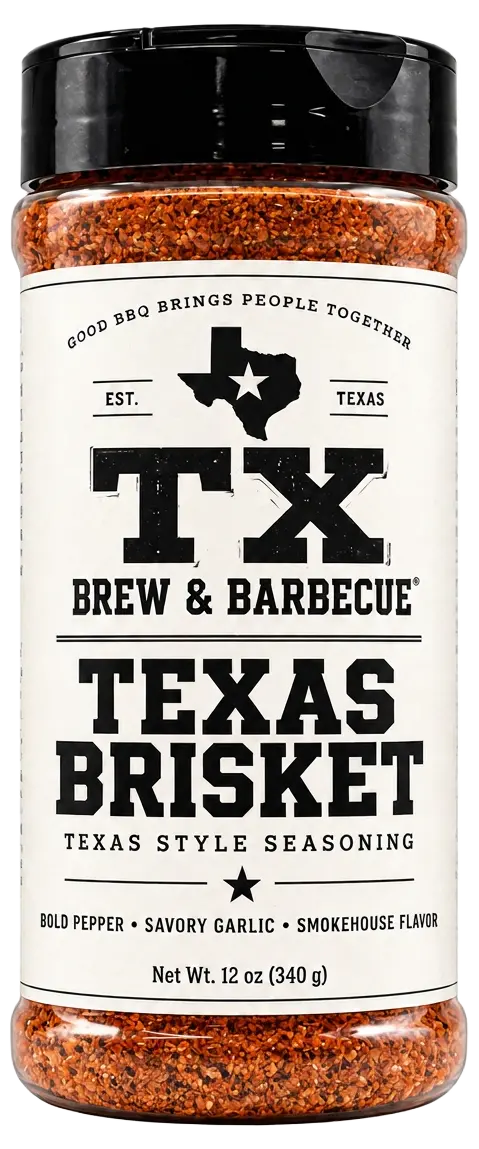
The rub this method is built on.
Texas Brisket - big pepper, savory garlic, smokehouse mesquite. $12.99 a bottle, and one bottle seasons a lot of packers.
Affiliate disclosure: links to All Things Barbecue on this site are affiliate links. If you buy through them, TX Brew & Barbecue may earn a commission at no extra cost to you. Ty is also an ambassador for Yoder Smokers. Neither changes what you pay or what shows up on the plate.